Ambient, Task and Accent Light: Three Jobs in One Room
Ambient, task and accent light do different jobs. Map what a room needs before choosing lamps, bulbs or fittings, and avoid lighting the wrong activity.
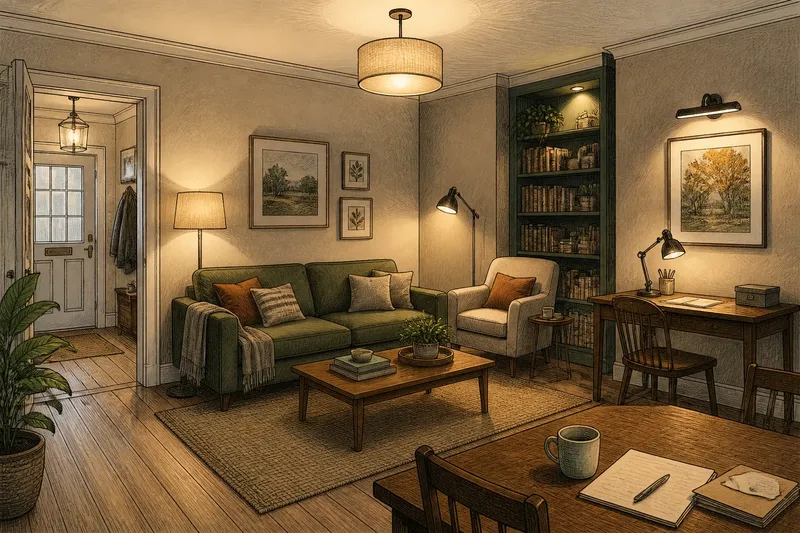
You sit down to read, switch on the ceiling light and discover that the page is bright while the rest of the room feels flat. Ambient, task and accent light are three different jobs, and naming each one before choosing a fitting helps a room work for more than a single activity.
The useful starting point is not a catalogue or a bulb box. It is a list of what people do in the room, where they do it and what needs to be visible. Once those jobs are clear, you can decide which light should cover the room, which should reach a particular surface and which should draw attention to something worth seeing.
What does each kind of light need to do?
Think of the three types as roles, not as fixed kinds of fittings. A ceiling light can provide ambient light; a table lamp can provide task light; a small fitting aimed at a picture can provide accent light. The same source may contribute to more than one role, but each role should still have a clear purpose.
- Ambient light gives the room a general layer of illumination. It helps people move around, find things and see the room as a whole.
- Task light puts useful light on a particular activity or work surface. Reading, sewing, food preparation and writing are typical examples.
- Accent light draws the eye to a chosen feature, such as a framed print, a plant or the texture of a brick wall.
These roles are not a ranking. A room may need all three, or it may have little reason for accent lighting. The question is what the room is asked to do. A hall needs clear general visibility; a desk needs light on its working area; a collection of objects may benefit from a more directed layer.
How do you list the room’s lighting jobs?
Walk through the room at the times you use it. Note the activity, its location and the surface or object that needs to be visible. Avoid writing “more light” as a job. It does not say where the light belongs, or what problem it is meant to solve.
A useful list might say: “walk from the door to the sofa”, “read on the sofa”, “sort post at the dining table” and “see the artwork beside the bookcase”. Each entry points towards a different lighting decision. The first is a general visibility job, the next two need light directed towards particular places, and the last may call for an accent.
Include activities that happen only occasionally if they affect the room’s layout. A dining table may be used for paperwork as well as meals. A spare room may alternate between storage, hobbies and visitors. Listing these jobs does not mean every one needs a separate fitting; it makes competing needs visible before you buy anything.
Say you have a living room with a sofa, a low table and a desk used for occasional paperwork. Your list might include moving safely between the doorway and sofa, reading on the sofa, writing at the desk and seeing a framed print. That gives you four jobs to address, not an instruction to buy four lamps: ambient light can support movement, while separate task sources and an optional accent source can serve the remaining locations.
Which jobs belong to ambient light?
Mark the parts of the room that need to be visible for ordinary movement and general use. Consider the entrance, circulation routes and larger areas where people sit or gather. Ambient light can come from a ceiling fitting, wall lights, several lamps or a combination. The fitting’s position matters as much as its label: a source hidden behind a tall cupboard cannot illuminate the area it cannot reach.
Look for places where the general layer is interrupted. A bookcase, partition or deep alcove can leave a neighbouring area gloomy even when the centre of the room feels bright. You may be able to address this with another ambient source rather than asking one ceiling fitting to do everything.
Also notice what the light lands on. Pale walls can reflect light around a room; dark finishes absorb more of it. Glossy surfaces may show distracting reflections. These details affect how the room feels, but they do not turn a task light into ambient light. Keep the role tied to the job: general visibility across the room.
Where does task light need to land?
For each focused activity, identify the actual working surface. A reading light should reach the book or page without shining directly into the reader’s eyes. A desk light should reach the writing area, while a kitchen task source should illuminate the relevant worktop rather than merely brighten the floor beneath it.
Check the position of the person as well as the position of the fitting. A source can cast a hand or body shadow across the work if it sits on the wrong side. For a desk, the user’s writing hand can help determine which side is less likely to block the light. For a shared table, a broader or adjustable source may serve more than one seat.
Ask whether the task source needs to move, turn or change direction. An adjustable arm is useful where activities shift; a fixed fitting suits a stable work area. For reading, consider the height and angle of the shade, the position of the book and whether anyone else in the room will face the source. The aim is a visible page, not a bright bulb in the line of sight.
What should accent light draw attention to?
Choose the object or surface first, then decide whether it benefits from emphasis. A picture, shelf display or architectural detail can take an accent layer. If nothing in the room needs to stand out, leave this role off the list. Decorative light is not a compulsory tax on having a wall.
Aim the light so that it reveals the intended feature rather than creating glare on glass or a bright patch nearby. A narrow beam can highlight a small object; a broader wash can show a textured wall. The beam, shade and distance all affect the result, so consider the fitting’s adjustability and the surface it will illuminate.
Accent lighting should add a point of interest without confusing the room’s other jobs. If it is the only light switched on, people may struggle to move or read comfortably. Treat it as a chosen detail within a room that already has a workable general layer.
How do you turn the list into a lighting plan?
Put each job beside its location and assign a role. One fitting may serve several jobs, but write down each one it is expected to cover. Then check that no activity depends on a source aimed elsewhere.
- List the room’s regular and occasional activities.
- Mark where each activity happens and what needs to be seen.
- Label each job ambient, task or accent, choosing the role by its purpose.
- Match likely sources to those jobs: ceiling or wall fittings for general coverage, directed lamps for work surfaces, and aimable sources for selected features.
- Check sightlines, shadows, obstructions and reflections from the places where people sit or stand.
- Decide which sources should operate separately, so a focused task does not require every light in the room to be on.
- Review the plan against the room’s normal activities before choosing bulbs or fittings.
Where a fitting, bulb or dimmer has specific compatibility requirements, follow the manufacturer’s instructions and the relevant local rules. For electrical work beyond ordinary user adjustments, consult a qualified electrician rather than turning a lighting plan into an impromptu wiring exercise.
What questions help settle the plan?
Can one lamp provide ambient and task light?
Yes, if its light reaches both the surrounding area and the activity surface without causing glare. A shaded floor lamp near a chair might contribute to general room light and also illuminate a book, but the result depends on its position and direction.
Does every room need accent lighting?
No. Accent light has a particular purpose: to give extra attention to a feature. If the room has no feature you want to highlight, the money, fitting and switch can be spared.
Should every job have its own fitting?
Not necessarily. A well-placed source can serve more than one job, especially when activities happen in the same area. Separate controls become useful when one activity needs focused light while another calls for a quieter general layer.
Do bulb colour and brightness decide the light’s role?
They affect how a source looks and feels, but role is determined by what the light is doing and where it falls. Choose a suitable bulb only after the job and fitting are clear, and check the fitting’s stated requirements before buying.
How can you check the plan in the room?
Before making a final choice, stand or sit where each activity happens and trace the light’s likely path. Check whether the fitting will be blocked by furniture, whether a shade puts a bright source in someone’s eyes and whether a reflective surface will catch it. These are practical questions, not a demand to make a room behave like a showroom.
For a temporary check, you can use a portable lamp in the intended location, provided it is safe to use there, and observe what it illuminates. If the desk remains in shadow, reconsider the task source’s position. If a picture catches an unpleasant reflection, adjust the proposed aim or choose another way to light it. Treat this as a visual check of the arrangement, not a substitute for following product instructions or professional advice where needed.
Keep the written list nearby when comparing fittings. A lamp that looks right on a shelf may not solve the job beside the sofa; a discreet wall fitting may suit the picture better than a brighter ceiling source. Ambient, task and accent light become easier to choose once each has a named responsibility. The room then has a plan based on what people actually need to see, rather than on how many fittings a ceiling can accommodate.