A Winter Evening Reset for a Living Room
A winter evening living room lighting reset helps you make reading, conversation and winding down more comfortable using the lamps you already own.
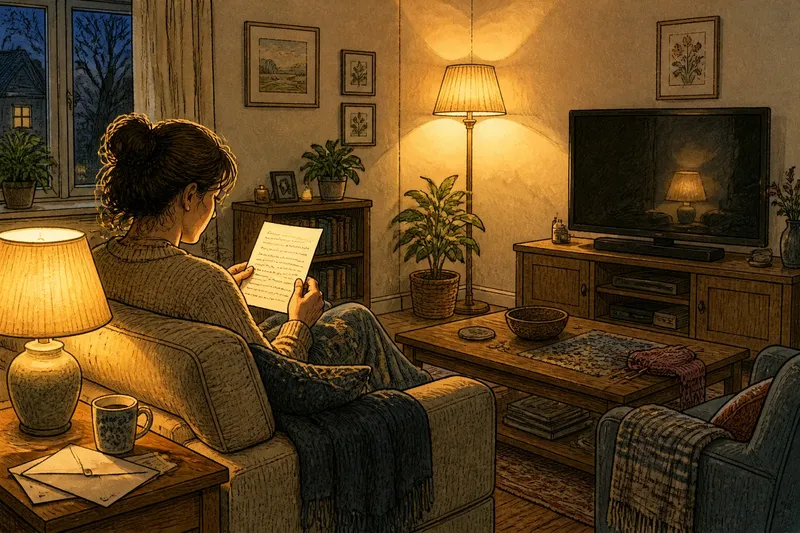
At half past five, the living room is dim, the television is on, and someone is trying to read a letter by the ceiling light. A winter evening living room lighting reset can make that room feel easier to use without starting with a shopping list. Begin with the awkward moments, then adjust the light and the evening routine around them.
What becomes uncomfortable under one ceiling light or the television?
Think about the points when the room stops working smoothly. Print may be hard to read; a jigsaw may disappear into shadow; knitting may require leaning towards the light. Television alone can leave the rest of the room too dark for finding a cup or moving about comfortably. A ceiling fitting may light the centre while leaving faces and corners gloomy.
These are not all the same problem. A task that needs light on a small area calls for a different adjustment from a room that feels stark, or a screen that catches reflections. Naming the specific discomfort helps avoid the traditional cure of turning on every light and hoping for the best.
How can you adjust the room for the whole evening?
Rather than planning around a list of tasks, notice how the room changes over the evening. You might want enough light to read a letter, then a softer setting for conversation, with a clear route to the door throughout. Leave the television’s screen position and reflections in view as part of the room, not as an afterthought.
Switch lamps on and off from the places where people sit. Check whether the controls are reachable without crossing a dark room or asking someone to fetch a phone. If a plug-in timer or smart bulb already forms part of the household routine, use it only if its controls remain simple for everyone who needs them.
For example, say a household has a ceiling light, a shaded table lamp beside the sofa and a floor lamp near the television. The table lamp’s bulb reflects in the screen, and the ceiling light feels harsh after the programme ends. They switch the table lamp off during viewing, leave the floor lamp on at a comfortable level, then use the shaded lamp for reading the post afterwards. The observable result is a screen without that reflection and a separate, ready light for the letter; if the floor lamp still distracts, they can switch it off and use the table lamp once viewing has finished.
What should you check before changing a bulb or buying a lamp?
Check the fitting’s instructions and the bulb label before replacing a bulb. Compatibility matters more than the label’s general promise of brightness. A shade can soften a source, but an opaque or narrow shade may also keep useful light from reaching the seat.
Look at the light from the sofa, not only from the doorway. Notice whether the bulb is directly visible, whether a glossy surface reflects it, and whether someone’s head blocks the light. Keep cables away from walking routes, and follow the fitting maker’s guidance on bulbs and safe placement.
- If the bulb is visible from the usual seat, then turn or reposition the shade; if the fitting cannot shield it, use another lamp for that seat.
- If the television shows a lamp reflection, then switch off or move that lamp; if the reflection remains, change the viewing or lamp position rather than choosing a brighter bulb.
- If a shade blocks light from reaching the reading place, then adjust its direction if possible; if it cannot be adjusted, try a different existing lamp.
- If a lamp’s cable crosses a walking route, then move the lamp or reroute the cable safely; if neither is practical, do not use that position.
- If the bulb label or fitting instructions do not confirm compatibility, then do not install that bulb; check the manufacturer’s guidance or ask a qualified electrician where needed.
- If the controls are difficult to reach, then place a suitable lamp or switch within reach; if an app is the only awkward control, use a simpler compatible arrangement.
How does the room’s light affect the evening routine?
A useful routine is a choice, not a timetable. Keep a reading light available while someone is using it, then switch to the softer lamp that suits conversation. For television, remove distracting reflections first. Avoid dimming the whole room if someone still needs clear light for a book or a practical task.
Colour appearance can change the feel of a room. A cool-looking bulb may seem stark beside warm-coloured furnishings; a warmer-looking one may feel more settled in the evening. Judge it in the actual room after dark, and follow the bulb and fitting guidance rather than assuming that a particular colour suits every person.
Which questions help you decide what to change?
Why does the room feel gloomy with the ceiling light on?
The fitting may leave the edges of the room dim, or the light may be blocked by furniture or people. Try an existing shaded lamp near the area that feels gloomy, then check the room from the seats where it is used.
What should you do if television glare persists?
Switch off or move the lamp reflected in the screen and check again from the usual viewing seat. If the reflection remains, adjust the screen or seating position where practical before changing bulbs.
Can a smart bulb make an evening routine easier?
It can if it is compatible with the fitting and everyone who uses the room can operate it. Keep a straightforward way to turn the light on and off, rather than making a phone the sole route to illumination.
When is another lamp worth considering?
Consider one if an ordinary evening still has a particular dark or uncomfortable spot after you have tried safe, sensible positions for the lamps you own. Choose a fitting that can serve that place without obstructing a walkway or creating a new reflection.
What is a sensible next move?
Make one change at a time, then sit in the room and notice what has improved and what has not. If moving a lamp solves the difficulty, there is no need to buy another. If not, the winter evening living room lighting reset has still narrowed the choice: you can look for a fitting that addresses a named problem, rather than one expected to improve everything.
Keep the final arrangement easy to use in ordinary conditions. A comfortable light that someone can switch on without ceremony is more useful than an elaborate setting that exists mainly in an app.